What Nose Shape Do I Have? How to Tell
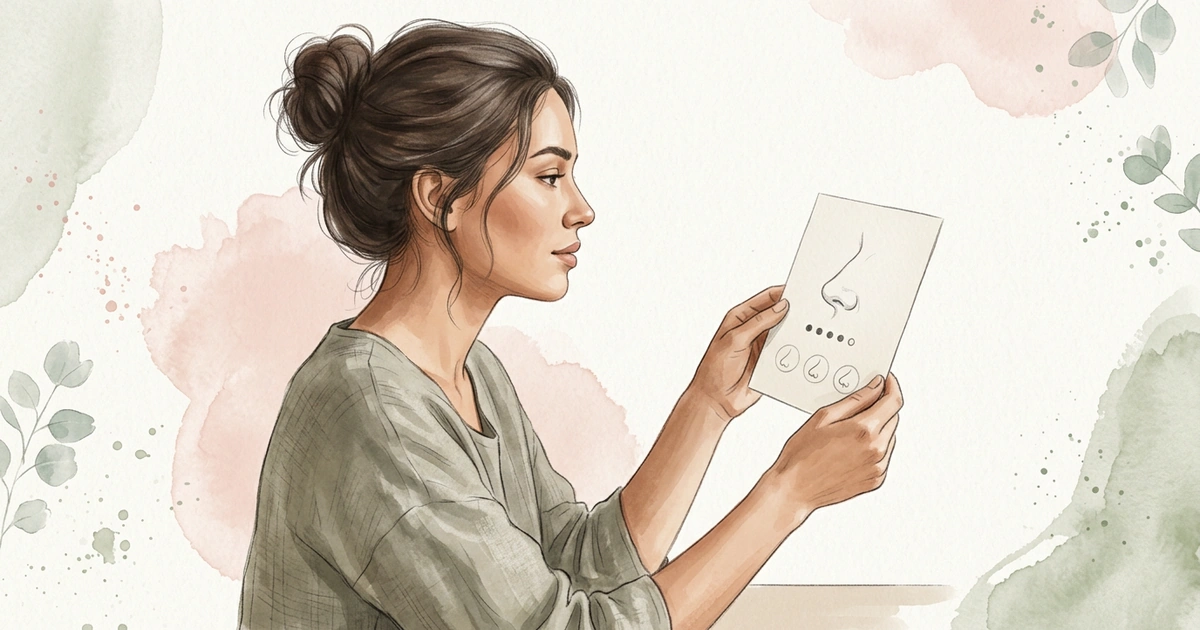
You want a name for your nose, maybe for a makeup tutorial, a surgeon, or just to settle it. Working out what nose shape you have takes two photos, a ruler or the edge of a card, and about 10 minutes.
Written by Mia Hartley6 min readUpdated
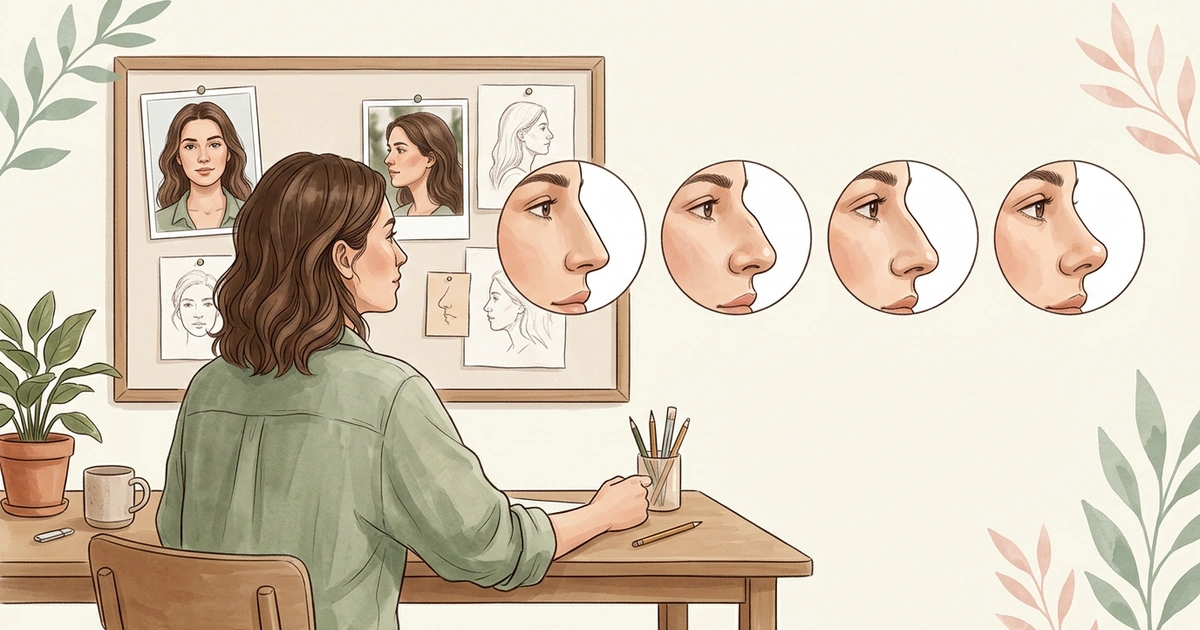
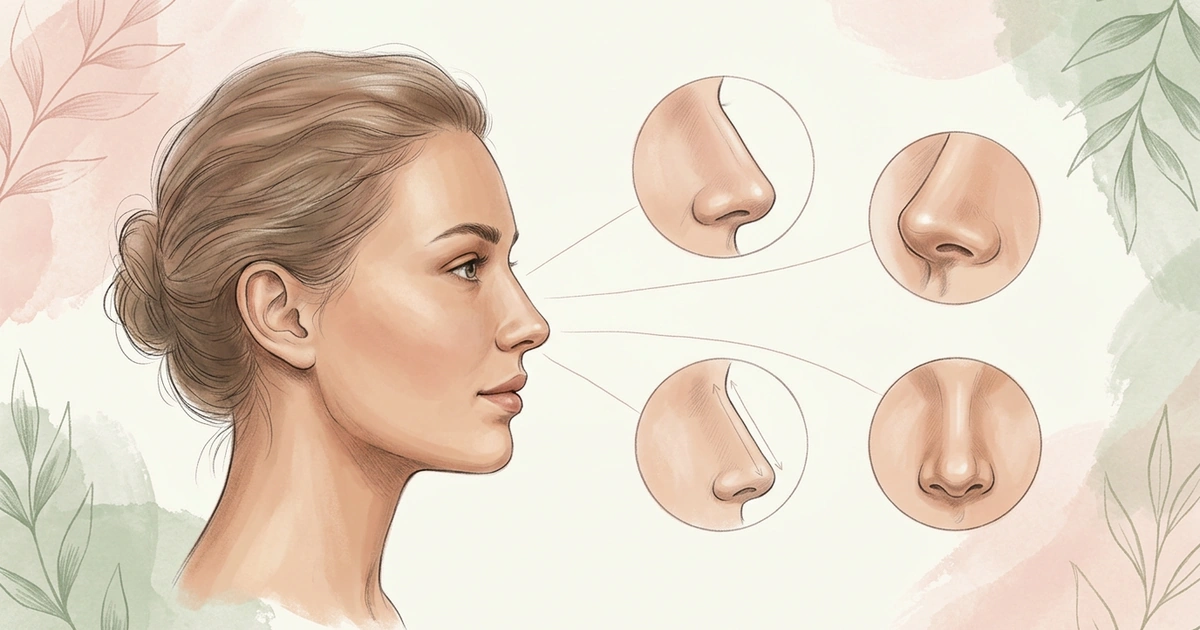
Every shape name comes from 3 features: the line of the bridge, where the tip points, and the tip’s shape and width.
The first two show from the side and the third from the front. A mirror only faces you head on, which is why staring into one rarely settles it.
Your nose shape is two readings put together. From a side photo, check whether the bridge is straight, bumped or dipped, and where the tip points. From a front photo, check the tip’s outline and the width. Then match the side result to a bridge name and the front result to a tip name.
Can You Have Two Nose Shapes?
Yes. Most people end up with 2 names, one for the bridge and one for the tip. A straight bridge with a small, rounded tip, for example, is Greek from the side and button from the front.
That’s the normal result, not a failed test, because real noses mix features. The checks below need only your phone and something with a straight edge.
Take Two Photos First
Take both photos from about 5 feet away. Most mistakes come from the photo, not the nose, so 3 more things matter.
Keep your chin level. Tilting your chin up shows more nostril and makes any tip look upturned. Tilting it down does the opposite.
Take a true side profile. Turn a full 90° so only one eye shows. Even a slight angle hides the line of the bridge.
Use soft, even light. Face a window rather than a lamp to one side. A shadow along the bridge can look like a bump that isn’t there.
Your Side Photo: Bridge Line and Tip Angle
The side photo shows 2 things: the line of your bridge and the direction of your tip. Zoom in a little before you start.
The ruler test. Lay a ruler or the edge of a card on the screen, from the top of your nose to the tip. If it lies flat, your bridge is straight. If the bridge rises above it, you have a bump. If there’s a gap under it, you have a dip. Your eye smooths out small curves, and a ruler doesn’t.
The nostril test. Look at how much of your nostrils shows in profile. If you can see a fair bit, your tip turns up. If you see almost none, it points forward or down.
Your Front Photo: Tip Shape and Width
The front photo shows 2 things: the outline of your tip and how wide your nose is.
Tip shape. Small and softly rounded points to button. A tip that looks fuller than the bridge above it points to bulbous. A crisp, clear outline is a defined tip.
Width. Compare the width across your nostrils with the space between the inner corners of your eyes. Being a little wider than that space is normal, so only a clearly broader base counts as wide.
If your nose seems to lean to one side, that’s a separate question from shape, with its own check.
Match Your Results to a Shape
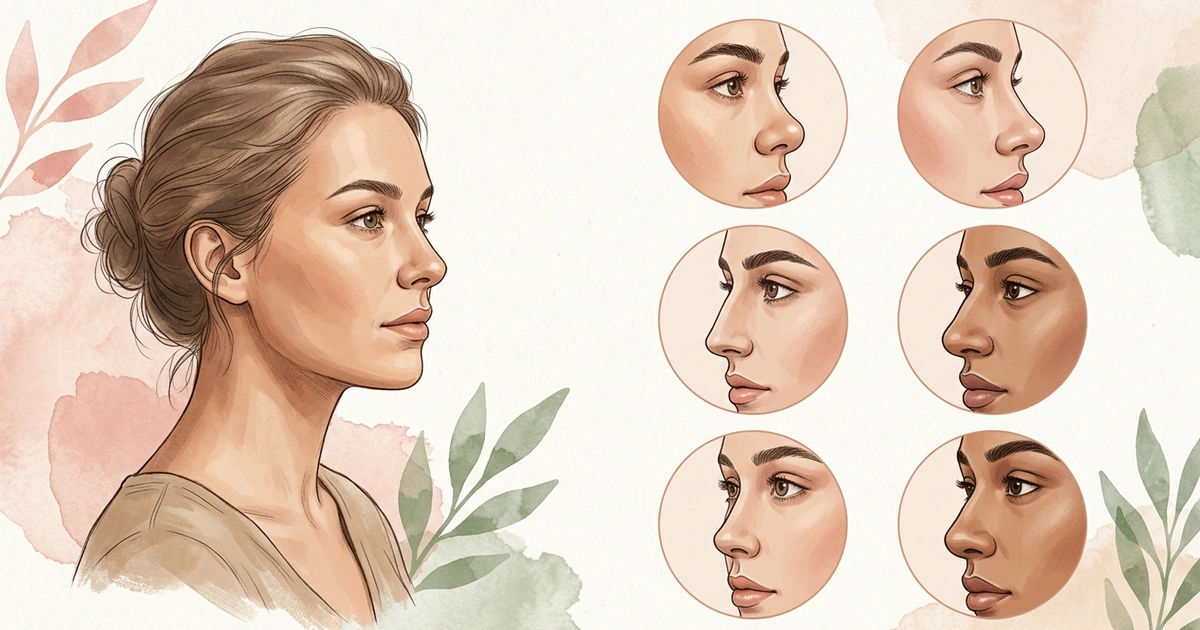
Put your side and front results together. Here’s what each result usually means.
- Straight bridge, tip pointing forward: Greek
- Bump on the bridge, tip pointing forward: Roman
- Strong curve, tip dipping toward the lip: hawk
- Dip in the bridge, tip turning up: ski slope
- Small nose, softly rounded tip: button
- Tip pointing up, any size: upturned
- Tip rounder than the rest of the nose: bulbous
- Whole nose full and soft: fleshy
- Broad base and nostrils: wide
- Tip pointing down: drooping
How NoseChic Helps You Check Your Nose Shape
Run NoseChic’s Nose Report on the same two photos you just checked, and each test gets a cross-check. On the side photo, Bridge smoothness rates the line your ruler measured, and Tip angle rates the direction your nostril test found. On the front photo, Tip shape and Bridge width cover the outline and the width.
Each report takes 10 to 20 seconds. Where a rating and your own reading disagree, zoom in on that part of the photo again before you settle on a name. The report rates features and leaves the naming to you, so the name still comes from your match list.
If you’d like to see a shape rather than read about it, the report’s Styles that suit you is a good next step.
Frequently Asked Questions
Is there an app or AI that tells you your nose shape?
Some apps and AI tools say they name your shape from a photo, but one angle can’t show every feature, and a close or tilted photo throws them off. NoseChic’s Nose Report takes a different route: it rates features like Bridge smoothness, Tip shape and Tip angle instead of giving a name. Run it on a side photo and a front photo, then match the ratings to a shape yourself.
How accurate are nose shape quizzes?
A quiz is only as good as your answers, and most ask you to compare yourself with drawings. Judging by eye, it’s easy to miss a slight bump or dip in the bridge. Checking a real side photo with a ruler or the edge of a card gives you a more reliable answer.
Can you change your nose shape without surgery?
Not the shape itself, which comes from the bone and cartilage underneath. What you can change is how it looks: camera distance, light and angle all make a difference in photos, and makeup contouring can soften how a bump or a wide bridge reads. For a lasting change, that’s a question for a facial plastic surgeon.
What if none of the shape names fits my nose?
Describe each part instead. Something like “straight bridge, rounded tip, wide base” is more precise than any label, and it’s what a surgeon or a makeup artist actually needs to hear. Shape names are only shortcuts for descriptions like that, and plenty of noses fall between them.
Sources and further reading
- Nasal Distortion in Short-Distance Photographs: The Selfie Effect (JAMA Facial Plastic Surgery, via PubMed)
- The validity of three neo-classical facial canons in young adults originating from the Arabian Peninsula (Head & Face Medicine, via PubMed Central)
- Anatomy of the Nose (Elements of Morphology, National Human Genome Research Institute (NIH))
See your new nose in seconds
Download NoseChic, try nose job simulation on your own photo, and find the nose that feels right.