Is My Nose Too Big for My Face? How to Tell
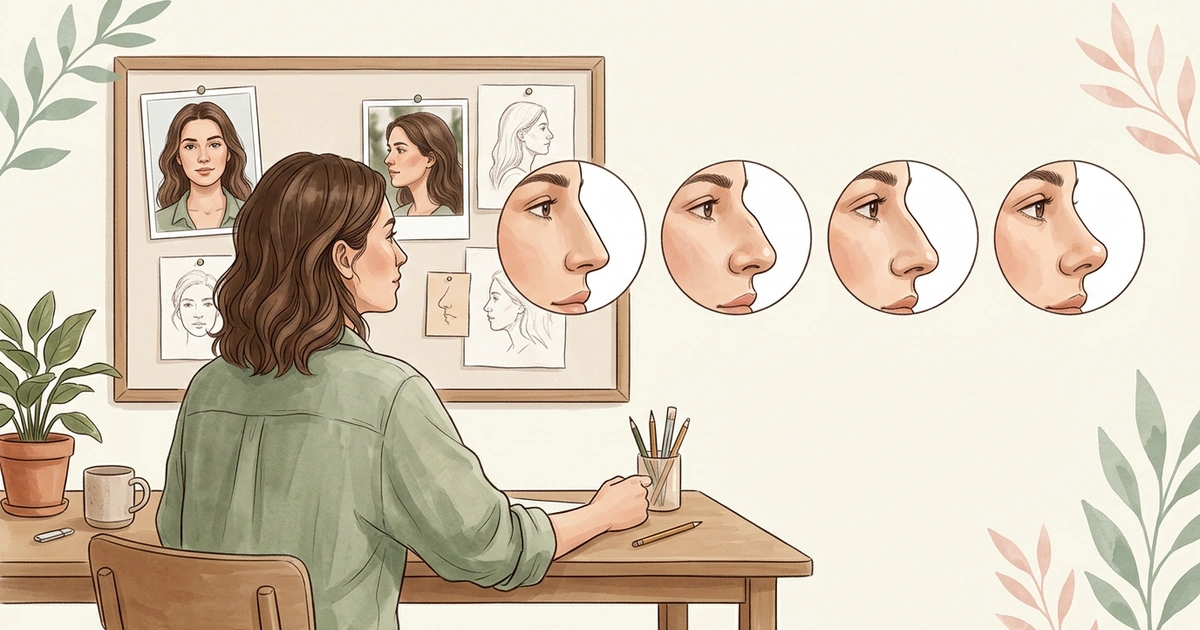
Someone tagged you in a group photo, or you caught your profile on a video call, and now your nose is all you notice. Whether your nose is too big for your face is something you can check in about 10 minutes.
Written by Mia Hartley6 min readUpdated
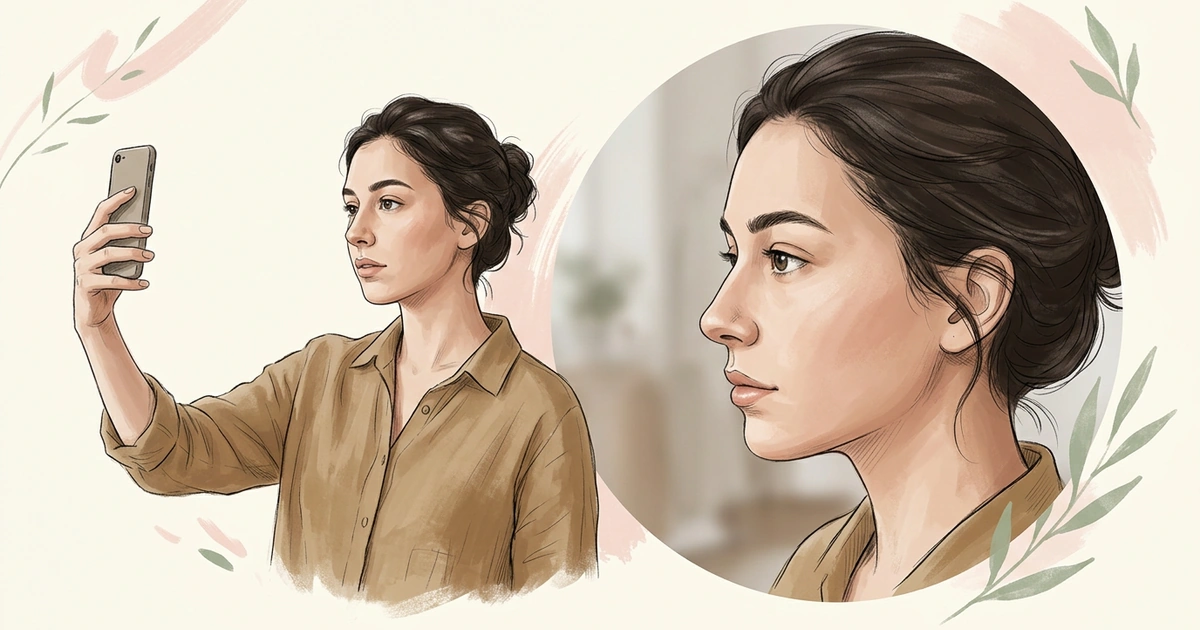
Most people ask this after a photo, not a mirror. That reaction is real, but the photo is often the problem: a nose that looks fine in one picture can look noticeably bigger in the next.
So rule the camera out first. Then three checks show whether length, width or profile actually stands out, or none of them does.
Usually your nose isn’t too big for your face, at least not in the way a selfie suggests. There’s no standard size for an adult nose, and a close photo can make it look up to about 30% wider. Check length, width and profile on photos taken from about 5 feet away. If none stands out, the camera was the problem.
Is There a Normal Nose Size?
No. There’s no standard size for an adult nose, so there’s no number yours could be too far above.
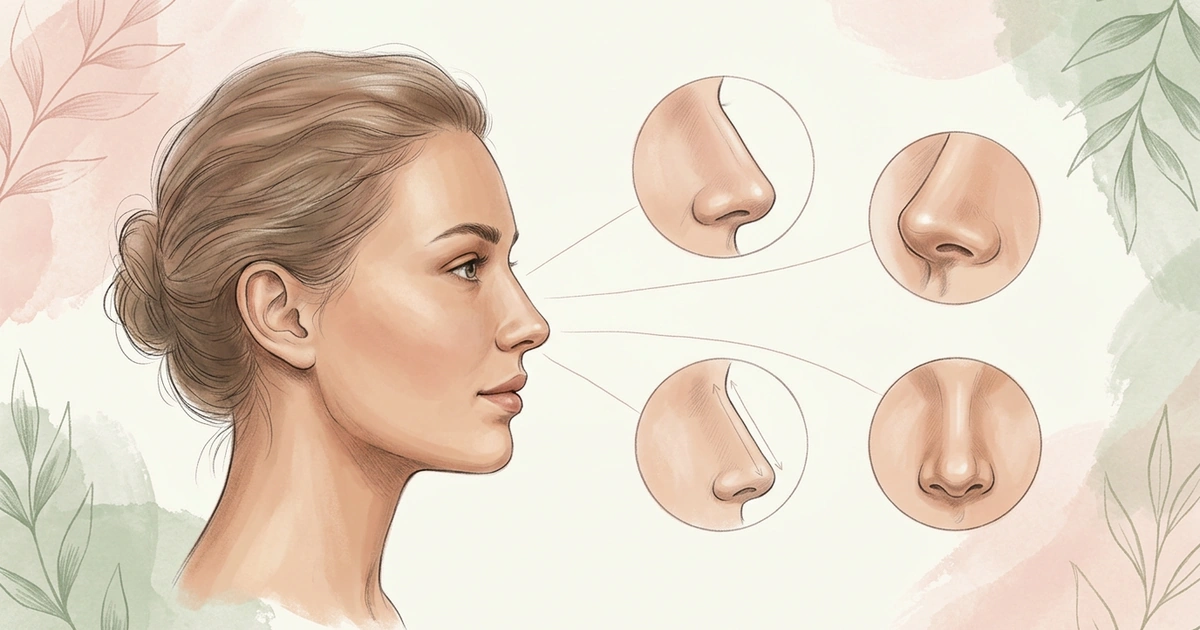
That means “too big” can only mean big next to something: the length of your face, the space between your eyes, or how far your lips and chin come forward. Each one has its own check below. Usually one feature stands out, or none does, and either answer is more useful than “big.”
Why Your Nose Looks Bigger in Pictures
Camera distance, mostly. A few things about how a photo is taken can make a normal nose look large.
The camera is too close. A phone held close enlarges whatever is nearest the lens, and that’s your nose. A selfie from about a foot away can make it look up to about 30% wider. From about 5 feet, the effect is mostly gone.
You’re using the front camera. It sits closest to your face and often shows a mirrored image, so the face you see isn’t quite the one other people see. The rear camera on a timer gives a truer picture.
The light comes from the side. A shadow down one side of your nose makes it look longer or more prominent. Light from the front, like a window, softens it.
Three Checks for Nose Size vs Face
Use two photos taken from that distance, one from the front and one from the side. You don’t need a ruler. Just compare distances on the screen.
Length against your face. On the front photo, compare 3 heights: hairline to brows, brows to the bottom of your nose, and the bottom of your nose to your chin. If the middle one is clearly the longest, length is what stands out.
Width against your eyes. Hold the width of your nose at the nostrils against the space between your inner eye corners. A little wider is normal, so only a clear difference counts.
How far it sticks out. On the side photo, compare how far your tip sits from your cheek with how far your lips and chin come forward. A tip well ahead of both is what people usually mean by a prominent nose.
Which one stands out. If one check clearly stands out, you can name it: long, wide or prominent. If none does, the feeling most likely came from a close camera or a single angle.
When the Worry Doesn’t Match the Photo
If the checks say your nose is in proportion and the feeling doesn’t go away, the feeling deserves attention too. That’s common, and it says nothing bad about you.
You’re comparing with edited faces. Many faces online are filtered, retouched or made by AI. Next to them, almost any real nose looks large. Compare your photos with unedited photos of people you know instead.
You’re checking a lot. Looking at your nose in every mirror and photo makes small differences feel bigger. Try a week of looking only at your two photos, then check again.
The worry is taking over. If you spend a lot of time worrying about how your nose looks, and others don’t see what you see, the NHS describes that pattern as body dysmorphic disorder. It advises talking to a GP if you think that might be you.
How NoseChic Helps You See Your Nose in Proportion
Your first two checks line up with two ratings in NoseChic’s Nose Report. Run it on the front photo from your checks, and Length and Bridge width look at the same things, while the Overall harmony score and its summary cover how your nose sits with the rest of your face. It works in ratings, not centimeters, and it never calls a nose too big.
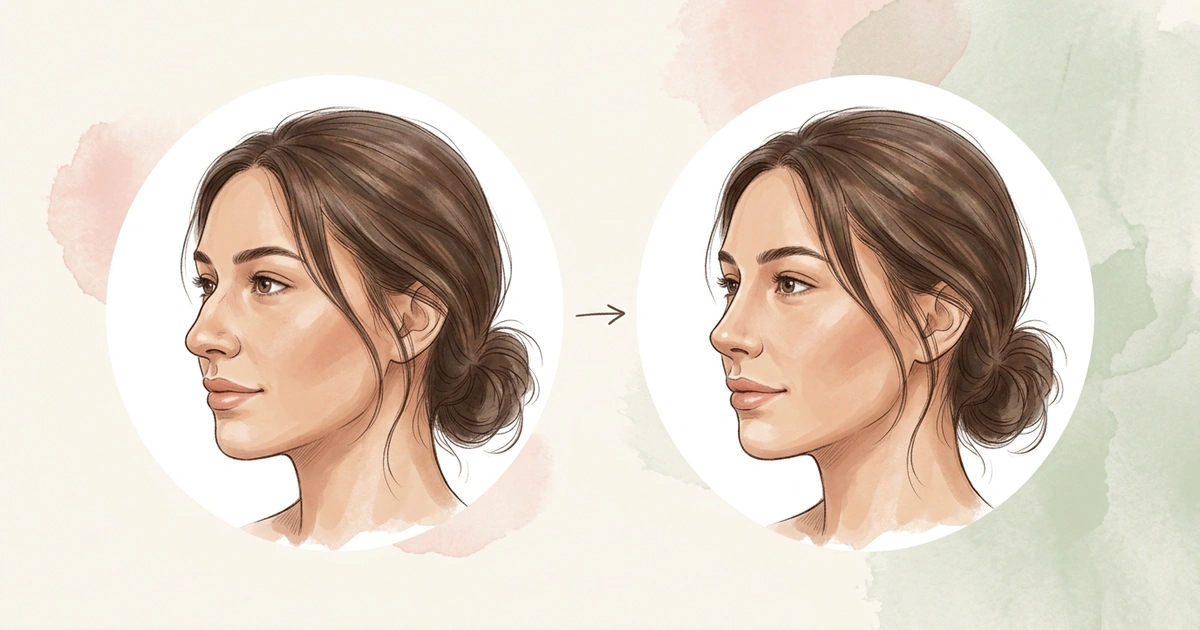
If one check stood out and you’re curious what a change would look like, preview it. Button explores a more compact shape with a softly rounded tip, and Slim Bridge a narrower bridge from the front. Make one of each from the same photo, then leave them alone for a while.
They stay saved in History. Open them again after your week of looking only at your two photos, and see whether the change still feels like the one you want.
Frequently Asked Questions
Is there a nose size test or calculator?
Online calculators usually apply classic ratio rules, like a nose as wide as the space between your eyes. When researchers tested rules like these, most real faces didn’t match them, so a calculator can call a normal nose too big. Comparing your nose’s length, width and profile with the rest of your face tells you more.
Do other people notice my nose as much as I do?
Usually not. You see your nose up close in mirrors and front cameras, often mirrored, while other people see it at a normal distance, next to the rest of your face. The NHS notes that the things people with appearance worries focus on are often not noticeable to others.
Does your nose get bigger with age?
Yes, slowly. The NIH notes that the nose keeps increasing in size with age, well after your teens. So your nose may really look a little bigger than it did in old photos, and the same is true for everyone your age.
What if the checks say my nose is long or wide?
That’s a description, not a problem. Long, wide and prominent are features plenty of people have. If it bothers you, start with how you’re photographed, since distance, light and angle change a lot. If it still bothers you, a nose job simulator like NoseChic lets you see a more compact or narrower look on your photo as a nose simulation before you talk to a facial plastic surgeon about your options.
Sources and further reading
- Nasal Distortion in Short-Distance Photographs: The Selfie Effect (JAMA Facial Plastic Surgery, via PubMed)
- Anatomy of the Nose (Elements of Morphology, National Human Genome Research Institute (NIH))
- The validity of three neo-classical facial canons in young adults originating from the Arabian Peninsula (Head & Face Medicine, via PubMed Central)
- Body dysmorphic disorder (BDD) (NHS)
See your new nose in seconds
Download NoseChic, try nose job simulation on your own photo, and find the nose that feels right.