Types of Nose Shapes: 10 Common Shapes Explained
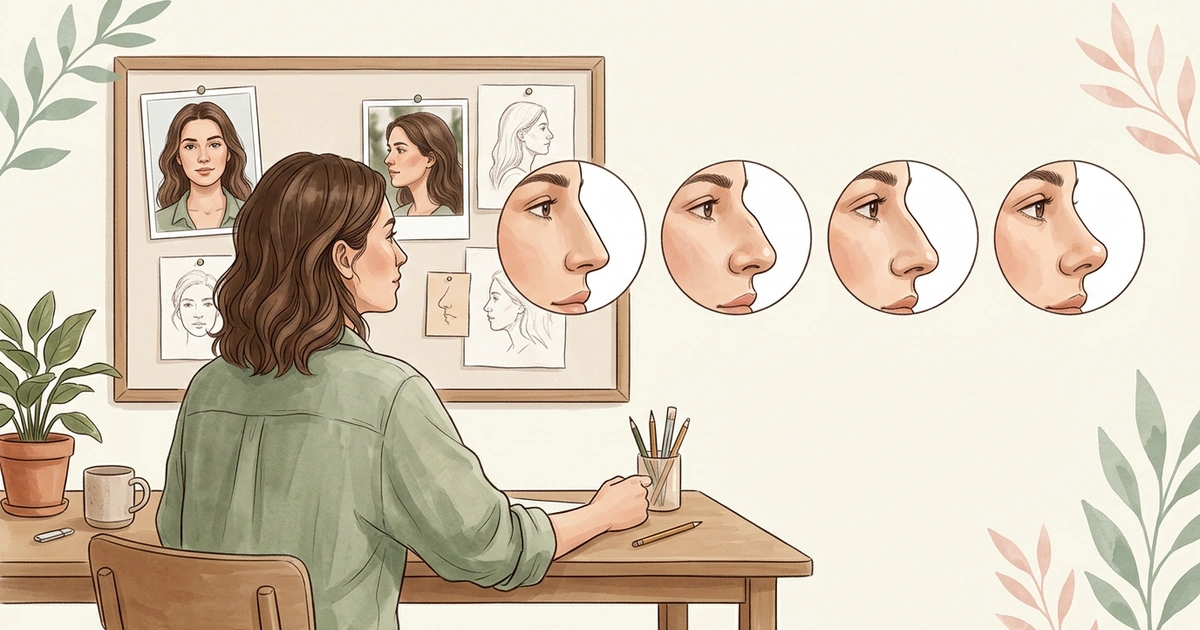
A friend called your nose Roman, a quiz said Greek, and now you want to know what the types of nose shapes actually mean. Each name is about one part of the nose, and once you know which, the list sorts itself.
Written by Mia Hartley6 min readUpdated
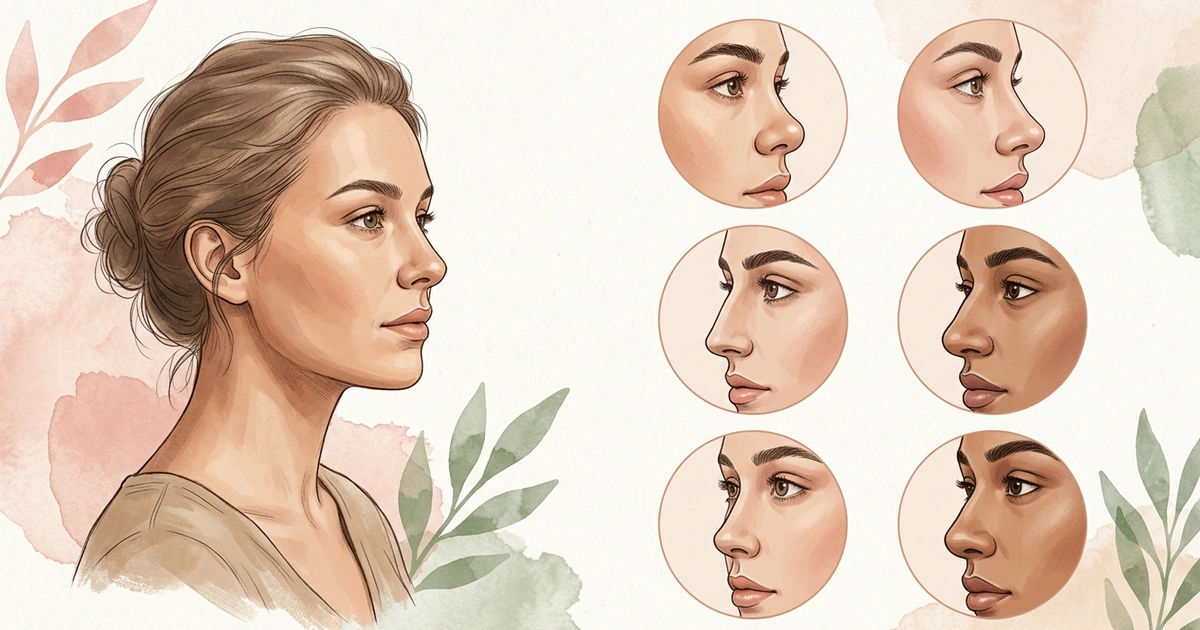
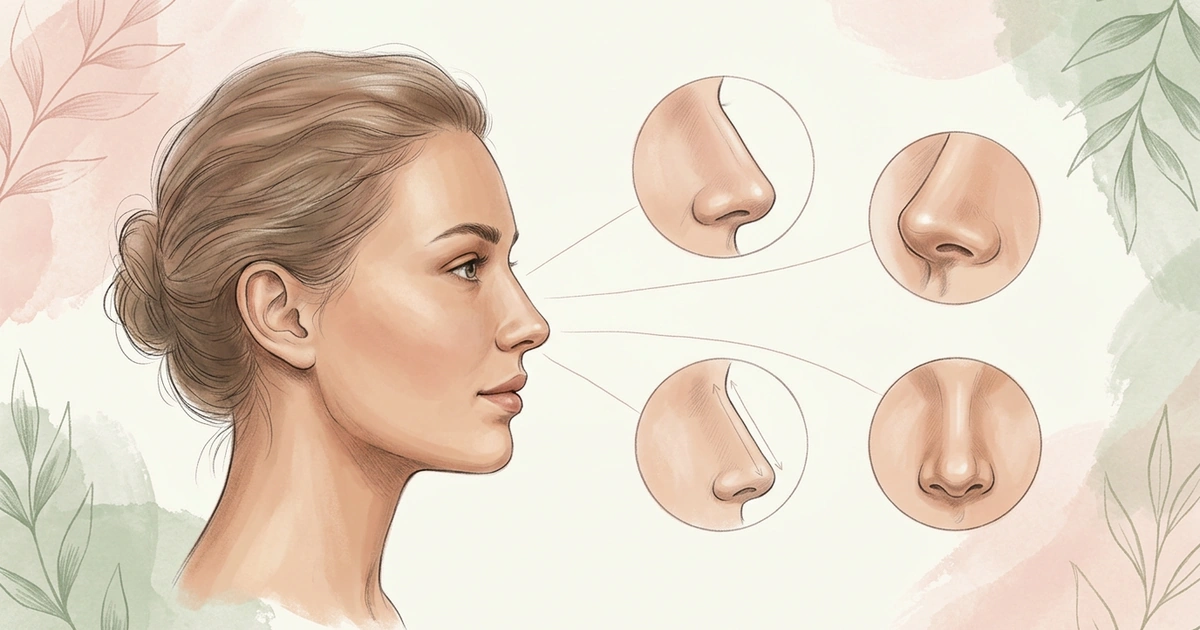
Most shape names come from the side view. Greek, Roman, hawk and ski slope all describe the line of the bridge, which a mirror barely shows you.
Charts don’t draw the lines in the same place, so one chart’s Roman can be another’s hawk. Below are the 10 names you’ll see most, grouped by the part each one describes, with a quick check for the pairs people mix up.
Greek, Roman, hawk and ski slope are the types of nose shapes named for the bridge. Button, upturned, bulbous, fleshy, wide and drooping are named for the tip or the width. Most noses fit two names, one from each group, and fleshy came out as the most common in the one large count.
Why Most Noses Get Two Shape Names
Each shape name covers one part of the nose: the bridge, the tip or the width. Two noses can share a name and still look different, because the name says nothing about the other parts.
So most noses get 2 names, like a Greek bridge with a button tip. That’s the usual result, not a sign you’ve read your nose wrong. If no name fits a part, describing it in plain words works just as well.
A shape name describes a nose the way “curly” describes hair. No shape ranks above another.
What Is the Most Common Nose Shape?
Fleshy came first in the one large count of nose shapes, at about 1 in 4 noses. A researcher sorted photos and artworks into 14 shape groups, and full, soft noses made up the biggest one. If your nose is on the fuller side, you have one of the most common shapes there is.
Read that as one sample, not a world ranking. The pictures came from Europe, Israel and artworks, so they can’t say what’s most common anywhere else.
Nose Shapes Defined by the Bridge
These 4 shapes are named for the line of the bridge, so you need a side view to see them.
Greek. A straight bridge from top to tip, with no bump or dip. Lay a ruler along it in a side photo and it touches the whole way down.
Roman. A bridge that curves outward, often with a visible bump, and a tip that points forward or slightly down. From the front, the bump can be hard to spot.
Hawk. A strongly curved bridge with a tip that dips toward the lip, a bit like a beak. It’s the most dramatic of the bridge shapes.
Ski slope. A gentle dip in the bridge that ends in a tip turning up, like the curved end of a ski.
Nose Shapes Defined by the Tip and Width
These 6 shapes are named for the tip or the width, so most of them read best from the front. Upturned and drooping are the exceptions, because direction shows from the side.
Button. A small nose with a softly rounded tip. The shape is what makes it a button, not the direction, so the tip can point forward or turn up slightly.
Upturned. A tip that points upward, so a fair bit of your nostrils shows from the side. It can come in any size.
Bulbous. A tip that’s rounder and fuller than the rest of the nose, so the end looks like a soft ball.
Fleshy. A larger nose with full, soft contours instead of sharp angles. Fleshy describes the whole nose, while bulbous describes only the tip.
Wide. A broader bottom, with nostrils that spread wider across the face. You see it best from the front. Some charts call it Nubian.
Drooping. A tip that points down toward the lip, so little or none of your nostrils shows from the side.
Greek vs Roman, and Other Look-Alikes
These 2 pairs are the easiest to mix up, and one check tells each pair apart.
Greek vs Roman. Check the bridge in a side photo. If a ruler lies flat from top to tip, it’s Greek. If the bridge rises above the ruler, even slightly, it’s Roman. A small bump still counts.
Button vs upturned. Button is about shape, and upturned is about direction. A button tip is small and rounded, an upturned tip points up, and plenty of noses are both, which is why charts often show them together.
How NoseChic Helps You Try Different Nose Shapes
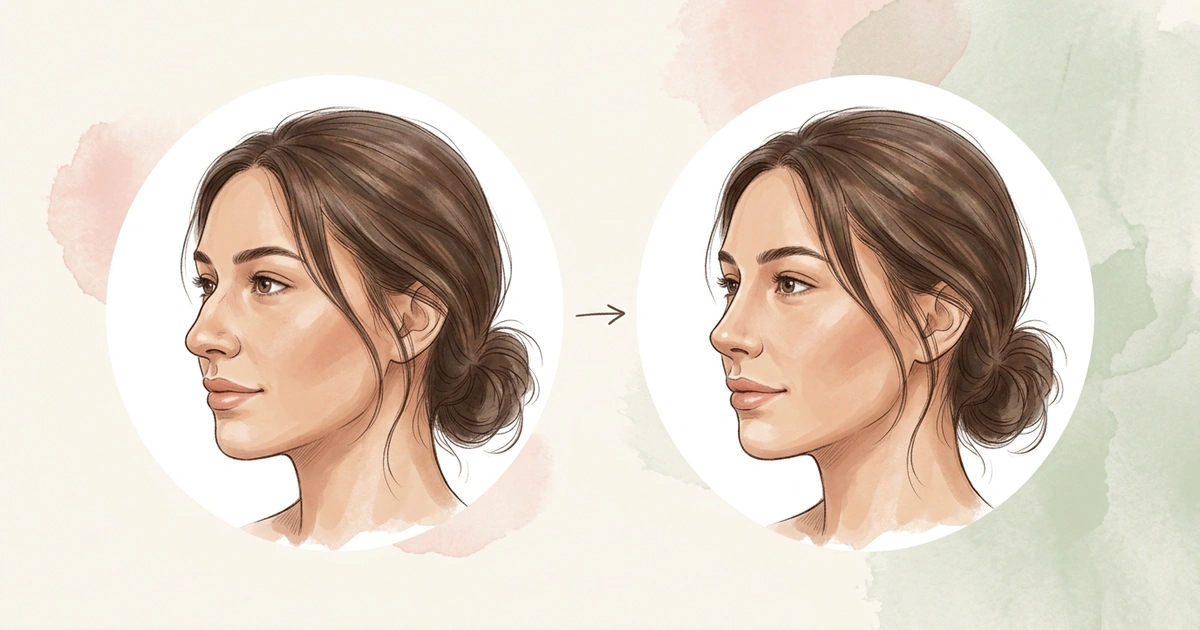
The Greek vs Roman check gets easier when you can see both. In NoseChic, choose Greek with a side photo, then use Try another style to make a Roman simulation from that same photo. Drag the Before and After slider on each to see how a straight bridge and a curved one sit with the rest of your profile.
Four of the 10 shapes have a style with the same name: Greek, Roman, Button and Upturned. For the others, use the nearest one. Sloped explores how the bridge meets the tip, so Sloped and Upturned come closest to a ski slope. All of these need a side or angled photo.
To work out which names fit you, run the Nose Report on that side photo. Its Bridge smoothness and Tip angle ratings describe the bridge line and the tip direction these names are built on. It rates features rather than naming a shape, so match the names yourself with the two-photo check in What Nose Shape Do I Have?
Frequently Asked Questions
What is a celestial nose?
Celestial is a chart name for a small nose with a gentle dip in the bridge and a tip that turns up. Most charts call the same shape ski slope, and some use celestial for any upturned tip. Since the names overlap, check the bridge and the tip separately in a side photo and use the word that describes each.
Is a Roman nose the same as a hawk nose?
Not quite. Both have a bridge that curves outward, but on a hawk nose the tip also dips down toward the lip. If the tip points forward, most charts call it Roman, even when the bump is large. Look at a side photo and follow the tip, not the bump.
Do nose shapes depend on ethnicity?
Partly. Nose shape varies between populations, which is why researchers say aesthetic goals should respect ethnic variation rather than one standard. The NIH also notes that most published nose growth standards are for people of Northern European descent. Within any group, noses still vary widely, so ethnicity alone won’t tell you your shape.
What if my nose looks like a different shape from the front and the side?
That’s expected, because the names come from different views. Bridge names like Greek and Roman show from the side, while button, bulbous and wide show from the front. Take the bridge name from your side photo and the tip or width name from your front photo, and put them together.
Sources and further reading
- Numerical survey of the different shapes of the human nose (The Journal of Craniofacial Surgery, via PubMed)
- Anatomy of the Nose (Elements of Morphology, National Human Genome Research Institute (NIH))
- The validity of three neo-classical facial canons in young adults originating from the Arabian Peninsula (Head & Face Medicine, via PubMed Central)
See your new nose in seconds
Download NoseChic, try nose job simulation on your own photo, and find the nose that feels right.