Is My Nose Crooked? How to Check
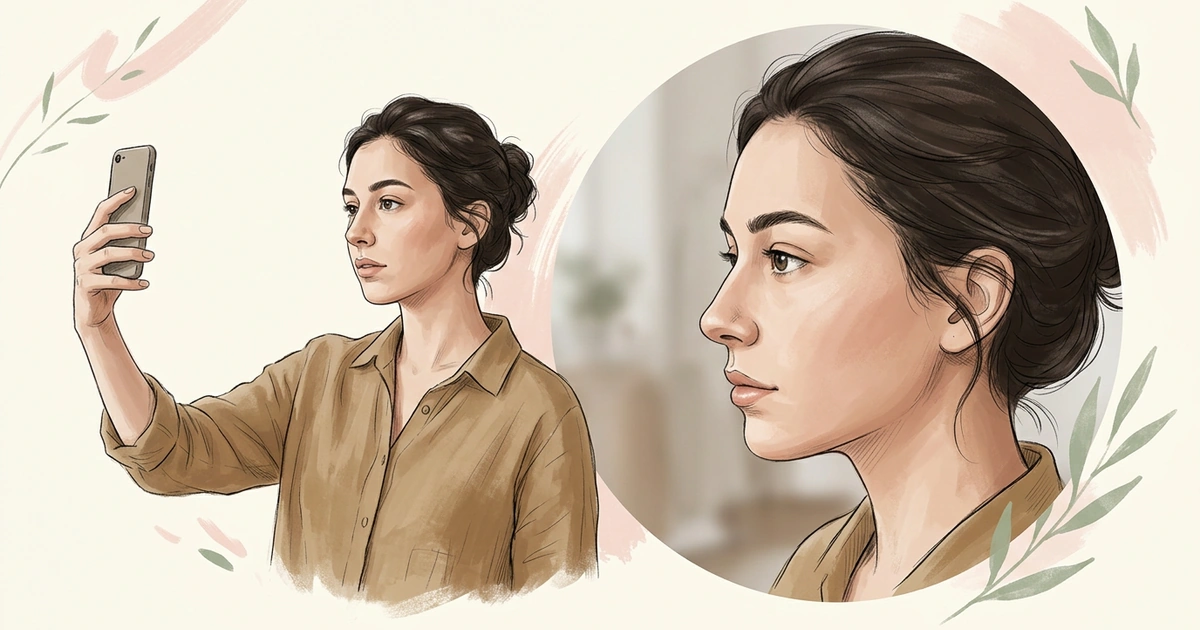
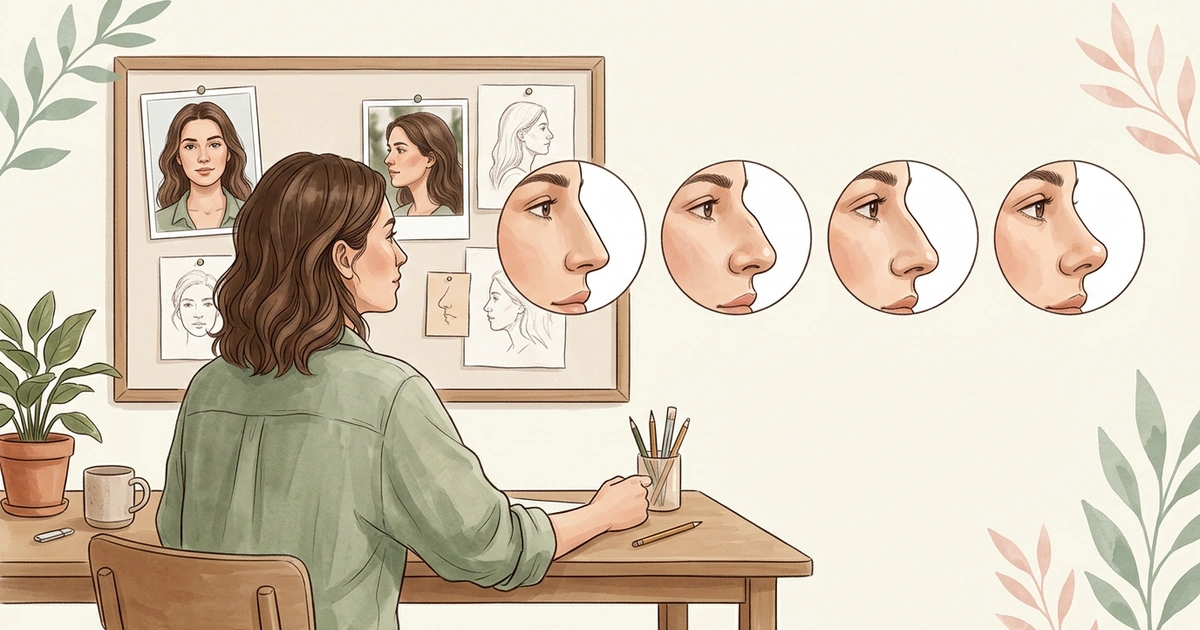
One side of your nose looks longer in photos, or the tip seems to drift toward one cheek, and you want to know whether your nose is crooked or the camera is. A front photo and a line down the middle tell you.
Written by Mia Hartley6 min readUpdated
The real question behind it is usually whether it matters. A lean only needs a doctor in a few situations, like after an injury or when breathing is hard.
The rest of the time it’s a question of looks, and you can check it yourself in about 5 minutes.
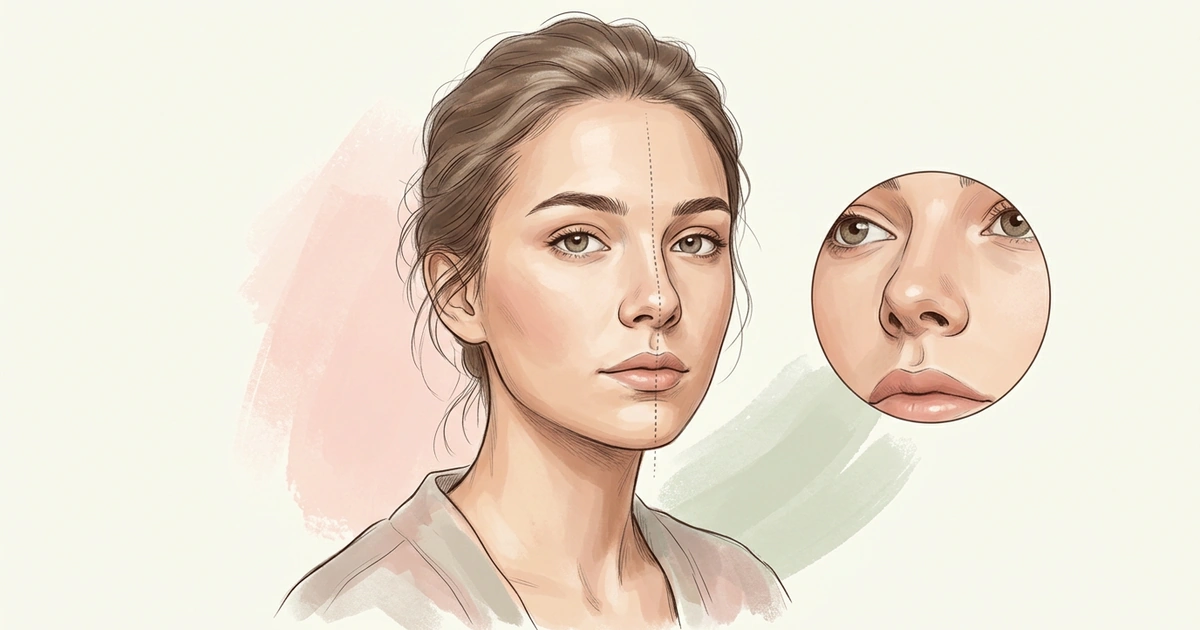
Most noses are a little crooked, and that’s normal. Take a straight-on photo and draw a line from the middle of your brows to your chin. If the bridge, tip or nostrils sit clearly off that line, your nose is crooked. A small lean that only shows up close doesn’t count.
How Common Is a Crooked Nose?
Very common. Almost every face is slightly different on its left and right side, and the nose sits right in the middle, where small differences are easiest to spot.
The inside is often off-center too. ENT Health, from the American Academy of Otolaryngology, estimates that as many as 80% of people have a septum, the wall inside the nose, that’s off-center. An old injury can also push the nose slightly to one side.
So the question isn’t whether your nose is perfectly straight. It’s whether it leans enough to see in a straight-on photo, not only in a close selfie.
How to Check Your Nose in a Front Photo
Draw a line down the middle of a straight-on photo and see whether your nose sits on it.
Take a level photo.
Take it from about 5 feet away, with the camera at nose height, and look straight into the lens. Even a slight head turn moves your nose off the line.
Draw the line.
Use a photo editor’s line tool, or hold a ruler against the screen, from the point between your brows to the middle of your chin.
Check 3 spots.
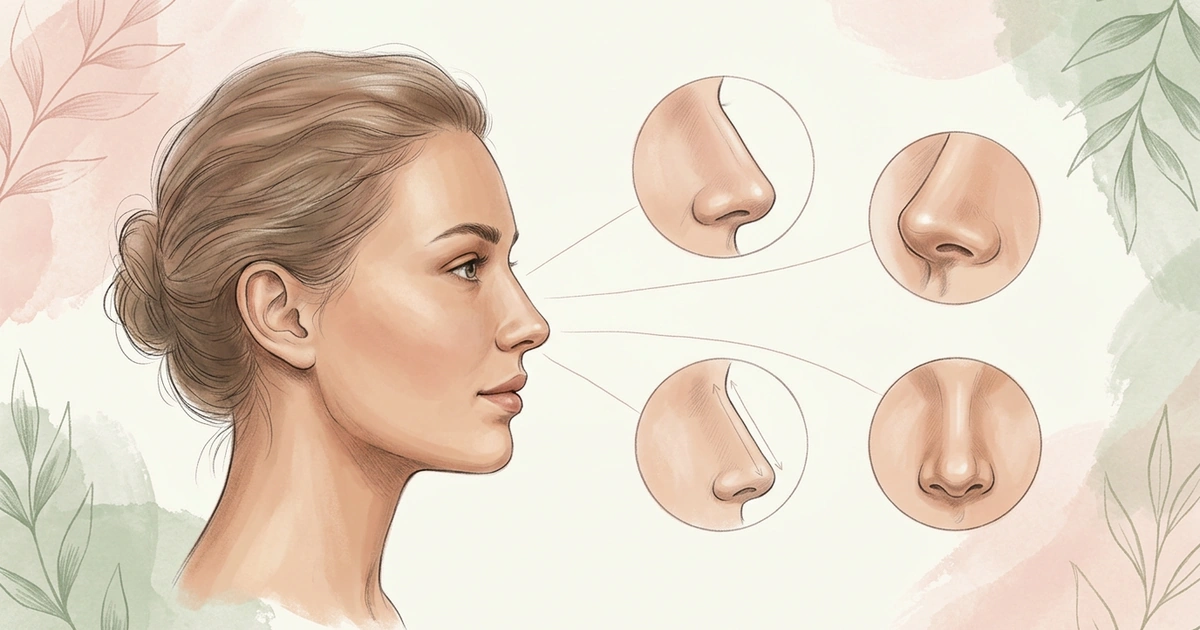
Look at where the bridge starts, where the tip sits, and whether the nostrils look about the same size. If one spot is clearly off the line, that’s where your nose leans.
Look from below.
Tip your head back and take a photo from under your chin. The strip between your nostrils should run straight up the middle. If it angles to one side, the lower part of your nose leans too.
Why Your Nose Looks Crooked in Pictures but Not the Mirror
Because a mirror flips your face and most photos don’t. You’re used to your mirror image, so a slight lean looks normal there and suddenly looks wrong in a photo, where it goes the other way.
The front camera. It’s the closest lens to your face, which makes your nose look bigger and any lean easier to notice. Its preview is often mirrored too, so go by the photo from your check.
A tilted head. Turning or tilting your head even a little makes one side of your nose look longer than the other.
Side light. Light from one side throws a shadow along the bridge that can read as a bend. Face a window so both sides are lit evenly.
Crooked Nose vs Deviated Septum
They’re related but not the same. A deviated septum is an off-center wall inside your nose. A crooked nose is one whose outside line leans. You can have either one without the other.
The bigger difference is breathing. ENT Health lists the common signs of a badly deviated septum: trouble breathing through one or both nostrils, often worse on one side, nosebleeds, sinus infections, and mouth breathing during sleep.
If you have those signs, see an ENT doctor, whatever your nose looks like from the outside.
When to See a Doctor About a Crooked Nose
See a doctor if your nose became crooked after an injury, if breathing is hard, or if the lean is getting worse. A slight lean you’ve always had, with no other symptoms, is usually only about looks.
After an injury. The NHS says to get help from NHS 111 if your nose is crooked after an injury, or if the swelling hasn’t started to go down after 3 days. Don’t try to straighten it yourself.
The 3-week window. A doctor may be able to straighten a broken nose with a quick procedure called manipulation. The NHS says it should be done within 3 weeks of the break, before the bones set.
Breathing that doesn’t clear. If breathing through your nose is still hard after the swelling has gone, or you get regular nosebleeds, get it checked.
Wanting it straighter. If only the look bothers you, talk to a facial plastic surgeon. They can examine your nose and explain your options.
How NoseChic Helps You Check Symmetry
The photo you drew your line on is the one to use in NoseChic. Its Nose Report includes a Symmetry rating, which describes how the sides of your nose relate to each other and to the center of your face. Read it next to your own 3 spots. If both point to the tip, you know where the lean is.
The Symmetric style then shows a more centered, balanced look on that same front-facing photo. As you move between Before and After, watch the tip and the nostrils, since those are the spots where most leans show.
Neither the rating nor the simulation can tell an old lean from a recent break. If yours followed an injury, or breathing through your nose is hard, the doctor checks above come first.
Frequently Asked Questions
Is it normal for one nostril to be bigger than the other?
Yes, it’s common. Faces are rarely perfectly even, and an off-center septum can make one side of the nose look or feel narrower. It’s only worth checking if it comes with trouble breathing through that side, regular nosebleeds or sinus infections. In that case, an ENT doctor can take a look.
Can you fix a crooked nose without surgery?
You can make it less noticeable. Makeup contouring and careful photo angles help with a slight lean. After a recent break, ask a doctor soon about straightening it. For a lean you’ve had for years, ask a facial plastic surgeon which options suit your nose.
What if my nose only looks crooked when I smile?
That’s common. Smiling moves the muscles around your nose, and they don’t always move evenly, so the tip can shift to one side. Check a relaxed, straight-on photo too. If your nose looks centered there, the lean comes from your smile, not your nose.
Sources and further reading
- Three-dimensional soft tissue analysis for the evaluation of facial asymmetry in normal occlusion individuals (Korean Journal of Orthodontics, via PubMed Central)
- Deviated Septum (ENT Health, American Academy of Otolaryngology–Head and Neck Surgery)
- Broken nose (NHS)
See your new nose in seconds
Download NoseChic, try nose job simulation on your own photo, and find the nose that feels right.