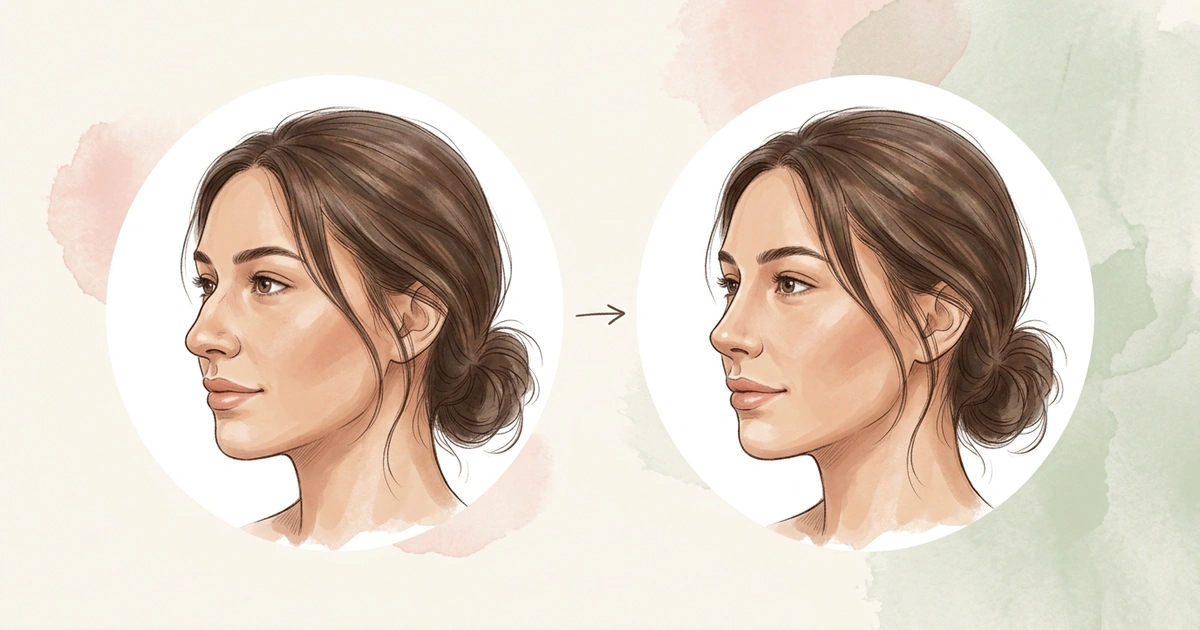
Rhinoplasty Swelling Timeline: Week by Week
It’s week three. Friends say your nose looks great, and all you can see is puffiness at the tip. A rhinoplasty swelling timeline tells you which parts of what you see are still swelling, and how long each one has left.
Written by Mia Hartley8 min readUpdated
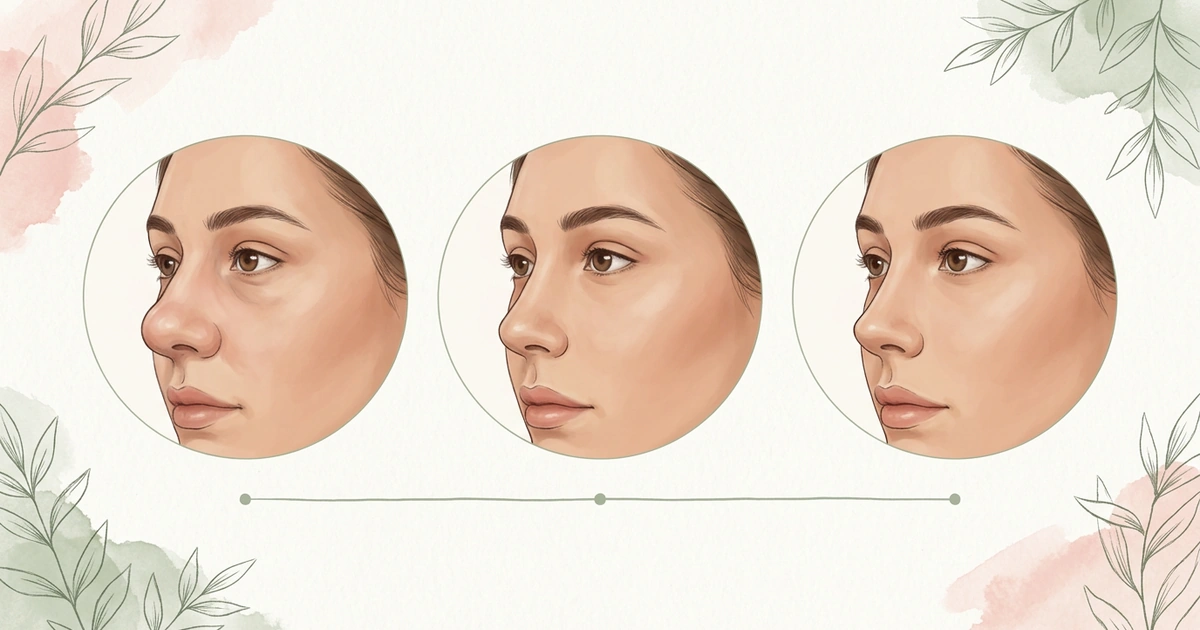
The splint comes off after a week or two, and that’s when most people expect to meet their new nose. What they meet is the new shape under weeks of swelling, a little bigger and softer than they pictured.
Then the swelling leaves slowly, and not evenly. The bruising around your eyes clears first, the bridge sharpens next, and the last of it often sits around the tip. Once you know that order, a puffy tip at week six stops looking like a problem.
On a typical rhinoplasty swelling timeline, the worst is over in the first week or two, your nose looks bigger than usual for four to six weeks, and most swelling, about 90%, is gone by three months. The last traces can take up to a year to settle, and a revision can take longer.
Why Swelling After Rhinoplasty Lasts So Long
Because your skin has to settle onto a new shape. During surgery, the bone and cartilage under your skin are reshaped, and the skin has to shrink back down onto them. Afterward, fluid collects in and under that skin, and it drains away far more slowly than a bruise fades.
That’s why your nose can look finished to everyone else while it still feels thick to you. Your bruises leave in weeks. Your swelling leaves in months.
ASPS surgeons say swelling often lasts longer than patients expect, and they push back on posts showing someone with no swelling after surgery. One calls that “simply a fallacy.” If a stranger online looked perfect at week two, you didn’t see the whole story.
Rhinoplasty Swelling Week by Week
Every nose heals at its own pace, so treat these windows as typical, not deadlines.
Days 1 to 3: Swelling Builds
Your nose, cheeks and the skin under your eyes swell, and bruising often spreads below the eyes. It feels like the worst cold of your life, except you’re not allowed to blow your nose.
This is when the basics matter most. Keep your head raised, especially when you sleep, and put cool compresses on your cheeks or under your eyes, not on your nose. Nobody looks good on day two. That’s normal.
- Swelling and bruising around the eyes and cheeks
- A stuffy, blocked nose
- Mild to moderate soreness that eases over the week
What to do: Raise your head on two or three pillows at night, and keep cool compresses, not ice, within reach.
Days 4 to 14: The Splint Comes Off
The bruises start to fade, and the splint comes off after one or two weeks. You see the new shape for the first time, wider and blunter than you pictured, because it’s still swollen. For a lot of people, that first look is the hardest moment of the whole recovery.
How fast this stretch goes depends partly on your surgery. ASPS surgeons say that when the bone is involved, people can expect about a two-week recovery. Most people go back to work or school in one to two weeks, with some puffiness but no bandage.
- A first look at the new shape, still puffy
- Bruises turning yellow, though they can take several weeks to clear
- A nose that feels stiff and slightly numb
What to do: Don’t judge the result yet. You’re looking at swelling, not your nose.
Weeks 3 to 6: Looks Good, Still Bigger Than Usual
Cleveland Clinic says your nose stays swollen for four to six weeks and will look and feel bigger than normal. This is the stretch where friends say it looks great and you can only see the tip. You’re both right. They see the new shape. You see the swelling on top of it.
The tip can also feel firm or a little numb when you touch it. That’s swelling too, and it softens over the coming months.
- A bridge line that sharpens week by week
- A tip that still looks full
- Light exercise once your surgeon clears you, usually within four to six weeks
What to do: Take one photo a week in the same spot and light, so you can see progress your mirror hides.
Months 2 to 3: Most of It Gone
Swelling keeps dropping slowly, and by three months most of it, about 90%, is gone.
For many people, this is when the nose in the mirror starts to feel like theirs. The bridge looks close to final, and the tip may still look a little rounder than it will. You’ll notice you’ve stopped checking it every time you pass a mirror.
What to do: Compare this month’s photo with your week-two photo, not with yesterday’s mirror.
Months 3 to 12: The Final Settling
The last of the swelling is small and slow, and you’ll mostly notice it in the morning. The tip is often the last part to look defined. A tip that looks soft when you wake up can look sharper by the afternoon.
The final result shows six months to a year after surgery, and up to two years after a revision.
- Morning puffiness that eases as the day goes on
- A tip that slowly gets more defined
- Small changes you see best in month-to-month photos
What to do: Keep your follow-up appointments, and bring your monthly photos to them.
Why Swelling Comes Back After It Went Down
Because healing isn’t a straight line. ASPS says swelling can come and go during the first year, so a nose that looked sharp on Tuesday can look puffy on Saturday. That’s normal, and it doesn’t undo your progress.
Puffiness tends to come back after anything that brings more blood or fluid to your face. The usual suspects:
- A hard workout or heavy lifting
- A long day in the sun or heat
- A salty dinner or a night of drinks
- A good cry
Puffiness like this settles on its own, and the next morning often tells you more than the evening before. If one side suddenly swells and hurts, call your surgeon instead of waiting it out.
How to Reduce Swelling After Rhinoplasty
Nothing makes swelling vanish, and anyone selling a product that promises it is overselling. What you can do is avoid making it worse in the first weeks:
Keep your head up. Sleep with your head raised, especially for the first weeks, so fluid doesn’t pool in your face overnight.
Cool your cheeks, not your nose. Use cool compresses, not ice, on your cheeks or under your eyes. Don’t press anything on the nose itself, since that can push on the new shape.
Hold off on lifting. Don’t lift anything heavy for four to six weeks, and save hard workouts until your surgeon clears you. If your nose looks puffier after a busy day, that’s your cue to slow down.
Go easy on the bridge. Don’t let eyeglasses or sunglasses press hard on your nose in the first weeks, and avoid anything that could knock it.
Stay out of strong sun. Keep sun exposure low while you heal. A wide-brimmed hat does most of the work.
Where NoseChic Fits In
If you’re reading this before surgery, the puffy months are easier when you know exactly which change you chose. Make a simulation from a side photo, like Greek for a straighter bridge or Upturned for a tip that points up more, and take it to your consultation. Ask your surgeon what that change is likely to look like at three months, when most swelling is gone, and at a year.
If you’re already healing, wait before you compare. A simulation is drawn on a photo with no swelling, so hold it up to your nose at month three, not week three. Even then, compare the line of the bridge and the direction of the tip, not the fine details. It stays in History on your phone until then, as a reminder of the direction you picked.
Frequently Asked Questions
Why is my nose more swollen in the morning after rhinoplasty?
Because fluid settles in your face while you lie down overnight. Cleveland Clinic says mild swelling, especially in the morning, can last up to a year after surgery. Sleeping with your head raised helps, and the puffiness usually eases once you’ve been upright for a while.
Does taping your nose help swelling after rhinoplasty?
It can, if your surgeon recommends it. In a randomized trial, taping the nose for two or four weeks after surgery reduced swelling, mainly in people with thicker skin. It made no difference for thin-skinned patients. Ask your surgeon whether taping suits your nose and how to apply it.
What if my nose still looks swollen after a year?
Bring it up at your one-year visit with photos from the past few months. Mild swelling can last up to a year, and longer after a revision, so a little is still normal. Your surgeon can examine the area and tell you whether it’s still settling or worth looking at more closely.
Sources and further reading
- Rhinoplasty (Nose Job) (Cleveland Clinic)
- Summer-break surgery: Why timing matters for younger rhinoplasty patients (American Society of Plastic Surgeons)
- Rhinoplasty Recovery (American Society of Plastic Surgeons)
- Effect of Postrhinoplasty Taping on Postoperative Edema and Nasal Draping: A Randomized Clinical Trial (JAMA Facial Plastic Surgery, via PubMed)
See your new nose in seconds
Download NoseChic, try nose job simulation on your own photo, and find the nose that feels right.